
A trip rarely goes wrong because of one missing item. It goes wrong when three small things fail together: the charger you forgot, the medicine you meant to pack, and the ID copy you assumed you wouldn’t need. Individually, each is a minor inconvenience. Together, they turn a good trip into a day spent solving problems instead of enjoying them.
This travel essentials list is built around that idea. It’s not about carrying more. It’s about knowing what you actually need, what you can safely skip, and what the consequence is if you get either one wrong.
What You Actually Need vs. What You Can Skip
Before the detailed list, it helps to separate the two categories most travellers blur together.
What you actually need rarely changes: documents, essential medicines, a working charger, and enough cash or a working card to get through your first few hours at the destination. Lose any of these and the rest of the trip absorbs the damage.
What you can skip is almost everything else, and this is where overpacking usually starts: a third pair of shoes “just in case,” full-sized toiletries when a 100ml bottle does the same job, or an outfit for every single day instead of a few versatile pieces you can repeat.
The list below follows that distinction item by item.
- Travel documents and digital backups
- The right bag for the trip length
- Toiletries in travel-sized containers
- Medicines and a basic first aid kit
- Chargers, power bank, and adapter
- Money, cards, and where you keep them
- Comfort items for long journeys
- A separate day bag
- Weather-appropriate clothing
- Offline maps and a basic backup plan
The Travel Essentials Checklist
1. Travel Documents and Digital Backups
Your ID, tickets, and hotel booking confirmation are the base of every trip. For domestic travel within India, a photo ID such as Aadhaar, PAN, or a driving licence is usually enough, though some hotels still ask for a printed copy at check-in even after you’ve shared a digital one while booking.
For international travel, add your passport and visa where required, and check your destination’s current entry requirements before you leave, since these can change and it’s easy to assume last time’s rules still apply.
What most lists skip: relying only on your phone for documents. If your phone dies, gets lost, or simply runs out of storage at the wrong moment, a digital-only backup is no backup at all. Photograph every document and also keep one printed copy in a separate bag from the original. If the original is lost, you’re not starting from zero.
2. The Right Bag for the Trip Length
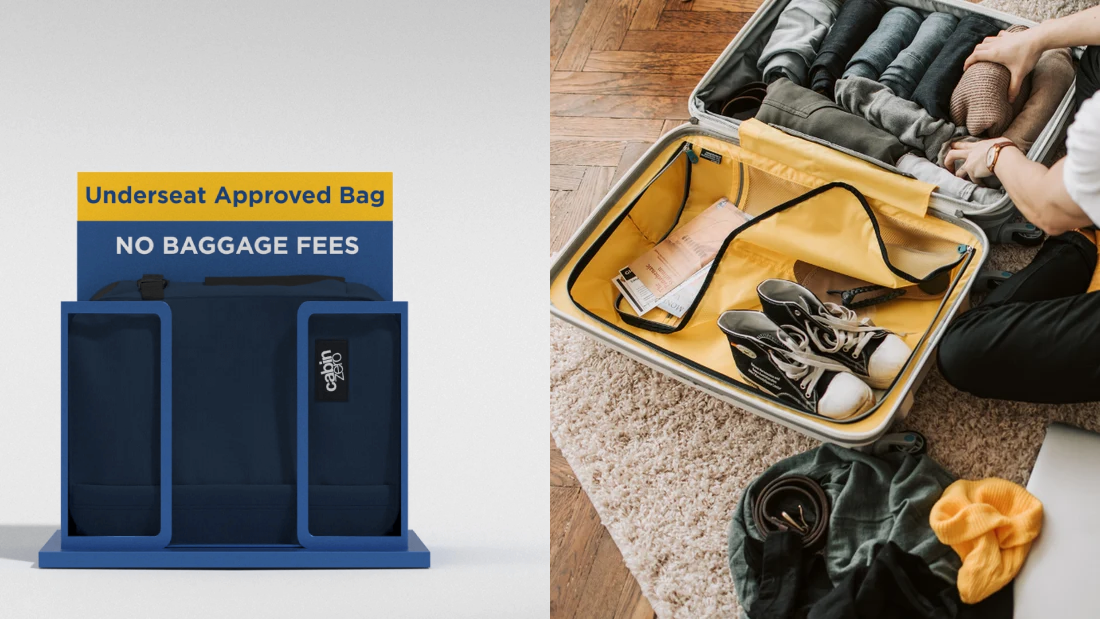
Your bag should match how long you’re going for, not how much you’d like to bring. A cabin-sized bag around 30 to 40 litres covers most trips of two to four days. Anything longer usually needs a mid-sized trolley, ideally with a separate compartment for shoes or anything damp.
Choosing a bag that’s too large is a quieter mistake than choosing one that’s too small. Extra space doesn’t sit empty, it gets filled with things you didn’t plan to carry, and you end up managing a heavier bag for the entire trip to justify packing it in the first place.
3. Toiletries in Travel-Sized Containers
Move your daily essentials into 100ml containers: toothpaste, sunscreen, face wash, and any cream you use regularly. Most airlines cap liquids in cabin baggage at 100ml per container, packed together in a transparent bag, though it’s worth checking your specific airline’s current policy since limits do get revised.
Skip the full bottles. They’re heavy, they’re one accidental cap-loosening away from ruining your clothes, and a hotel or a local pharmacy can usually replace anything you genuinely run short of.
4. Medicines and a Basic First Aid Kit
This is the category where a small oversight has the biggest consequence. Carry your regular prescription medicines with a few extra days’ supply beyond your travel dates, in their original packaging along with the prescription, since some countries do check this for specific medication categories at immigration.
Add the basics: a general pain and fever reliever, oral rehydration salts (genuinely useful for hill stations, hot climates, or motion sickness), band-aids, and an antiseptic. If you’re travelling internationally, it’s worth checking whether your destination treats any of your regular medications differently, since a few common over-the-counter drugs in India are restricted elsewhere.
Why it matters: Forgetting this category doesn’t just cause discomfort. It’s the one packing mistake that can genuinely cut a trip short.
5. Chargers, Power Bank, and Adapter
A phone charger, one power bank, and a universal adapter for international trips cover almost everything. One detail travellers frequently miss: power banks generally need to travel in your cabin bag, not checked baggage, and airlines typically cap capacity around 100Wh (roughly 20,000mAh) without prior approval. Buying a larger one assuming it’ll be fine can mean it gets confiscated at security.
A short charging cable is more useful than a long one when you’re sharing one socket at a boarding gate or a train berth, which is a small thing that only becomes obvious once you’re actually there.
6. Money, Cards, and Where You Keep Them
Carry a mix of cash and cards rather than depending on one. Many hill stations and smaller towns in India still run largely on cash, and not every vendor accepts cards. For international travel, arranging a forex card or a small amount of local currency before you land is usually cheaper than exchanging money at the airport once you arrive.
Split your cash and cards across two places, such as a slim travel wallet and a separate inner pocket, instead of keeping everything in one visible bag compartment. If one bag is misplaced or picked, you’re not left with nothing.
7. Comfort Items for Long Journeys
A travel pillow, an eye mask, and a light pair of socks make a genuine difference on overnight trains and long flights, mainly because arriving rested changes how much of the first day you can actually use. These are optional for short daytime trips and worth skipping if your longest leg is under three or four hours.
8. A Separate Day Bag
Your main bag stays at the hotel. What you actually carry while out for the day is a smaller, lighter bag, ideally different from your main one, with a secure compartment for your phone and wallet and enough room for water, a light layer, and whatever you pick up along the way.
9. Weather-Appropriate Clothing
This is where checking the actual forecast for your travel dates matters more than packing for the general season. Hill stations, coastal towns, and cities in the same state can see noticeably different weather within the same week, especially during transitional months.
Pack in layers instead of bulk. One light jacket, a few breathable pieces you can repeat, and one comfortable pair of walking shoes will outlast a suitcase of outfit options you end up not wearing. For hill destinations, plan for the temperature drop after sunset even if the day feels warm. For monsoon travel, a compact rain layer and a waterproof pouch for documents do more than an umbrella, which rarely survives wind at a hill station or a coastal town.
Get this wrong and the cost isn’t dramatic, but it is constant: you spend the whole trip either too cold, too hot, or carrying clothes you never touch.
10. Offline Maps and a Basic Backup Plan
Phone networks fail more often than people plan for in remote areas, hill stations, and during monsoon travel. Download offline maps of your destination before you leave. It costs nothing and matters exactly once, at the moment you actually need it.
What Changes for Domestic vs. International Trips
The core list above stays largely the same. What changes is the margin for error.
Domestic trips within India are forgiving: a forgotten item is usually a short walk or a quick order away. International trips are less forgiving, mainly around documents, medication rules, and currency, since fixing a mistake abroad often costs more time and money than it would at home. If you’re travelling internationally, give the documents and medicine sections above extra attention before you leave, not after you land.

Travel Essentials by Traveller Type
Women travellers commonly add a scarf that doubles as sun protection or coverage at religious sites, a slightly larger toiletry and skincare kit, and a cross-body bag, which tends to be safer than a shoulder bag in crowded markets.
Men travellers commonly add a compact grooming kit, a foldable rain layer, and a dedicated pouch for cables and chargers, mainly to avoid the small daily frustration of untangling them from clothes.
Family trips with children need planning that scales with age: diapers and feeding supplies for infants, entertainment and snacks for older kids, and a printed or digital ID for each child, since some hotels and domestic flights do ask for proof of age beyond the adults. Build in more transition time between every stage of the journey than feels necessary. Family travel rarely moves at the pace a solo trip does, and the cost of underestimating that is a stressed first day, not a ruined trip.
Common Packing Mistakes and What They Actually Cost You
- Packing for the season, not the forecast – you spend the trip layering wrong instead of enjoying it
- Carrying more than two pairs of shoes – extra weight for options you won’t use
- Keeping all cash and cards in one place – one lost bag becomes a lost trip, not a minor setback
- Relying only on digital documents – a dead phone at the wrong moment means starting from nothing
- Leaving medicines until the last hour – the one category where a rushed decision has the highest cost
- Buying a bigger power bank without checking airline limits – risk of it being taken away at security
Quick Reference Checklist
| Category | What You Actually Need | What You Can Skip |
|---|---|---|
| Documents | ID/passport, tickets, printed + digital backup | Extra unused forms, expired IDs |
| Bag | One cabin bag or trolley matched to trip length | An oversized bag “just in case” |
| Toiletries | Travel-sized essentials in a leakproof pouch | Full-sized bottles |
| Health | Prescription medicines, basic first aid, ORS | A large, non-essential medicine kit |
| Tech | One charger, one power bank, adapter if needed | Multiple redundant cables |
| Money | Cash and card split across two places | Carrying everything in one wallet |
| Clothing | Layered, weather-checked, repeatable pieces | An outfit for every single day |
Packing Right Solves the Small Problems
Getting your packing right solves the small problems. It doesn’t solve the bigger question of where to go and how to make the most of the time once you’re there. At Shree Krishna Travel World, we build tour packages around how people actually travel, whether that’s a quick domestic getaway, a hill station escape, or an international holiday with the family. Get in touch with our team to plan an itinerary that fits your trip.