Ask five families who have done the Narmada Parikrama how it went, and you will get five different answers. One will tell you about a knee injury near Omkareshwar. Another will talk about a dharamshala in Maheshwar where the caretaker refused to take money. A third will admit they only managed the 21-km Uttarvahini stretch in Gujarat and still call it the most moving day of their life.
That is the thing about this yatra. It is not one experience. It is at least three different journeys wearing the same name, and most guides online blur them together. This one does not.
Below, you will find the route broken down the way pilgrims actually walk it, what registration genuinely involves in 2026, real cost ranges by mode of travel, and the planning mistakes that trip up first-timers every single season.
What Exactly Is the Narmada Parikrama?
The Narmada Parikrama is a circumambulation of the Narmada River, walking or travelling along one bank from source to sea, and returning along the opposite bank, without ever crossing the river itself. That last part is the rule most newcomers get wrong: you can cross tributaries, but crossing the main river breaks the parikrama and traditionally means starting over.
The river is treated as a living goddess in Hindu belief, referred to as Reva in older texts. Unlike rivers where a ritual dip is central to the practice, Narmada worship is built around darshan, the belief that simply beholding her is purifying. That single distinction shapes how the whole yatra is practised, right down to why pilgrims camp along the banks rather than rushing through.
The full circuit runs roughly 2,600 to 3,800 km depending on which side routes and temple detours a pilgrim takes, and on foot it typically takes between 3 and 6 months.
The Three Ways People Actually Do This Yatra
Most articles describe only the full padyatra. In practice, three very different groups attempt this pilgrimage, and conflating them causes most of the confusion around dates, cost, and difficulty.
| Type | Duration | Distance | Who It Suits |
|---|---|---|---|
| Full Padyatra (on foot) | 3–6 months | 2,600–3,800 km | Sadhus, retirees, serious spiritual seekers with months free |
| Vehicle Parikrama (car/bus) | 12–20 days | Same full circuit, by road | Working professionals, families with limited leave |
| Uttarvahini Panchkoshi Parikrama | 1 day | ~21 km | First-timers, elderly parents, anyone testing the experience |
The third option is the one drawing the most search interest for 2026, and it deserves far more attention than most guides give it.
The Uttarvahini Parikrama: Gujarat’s One-Day Pilgrimage
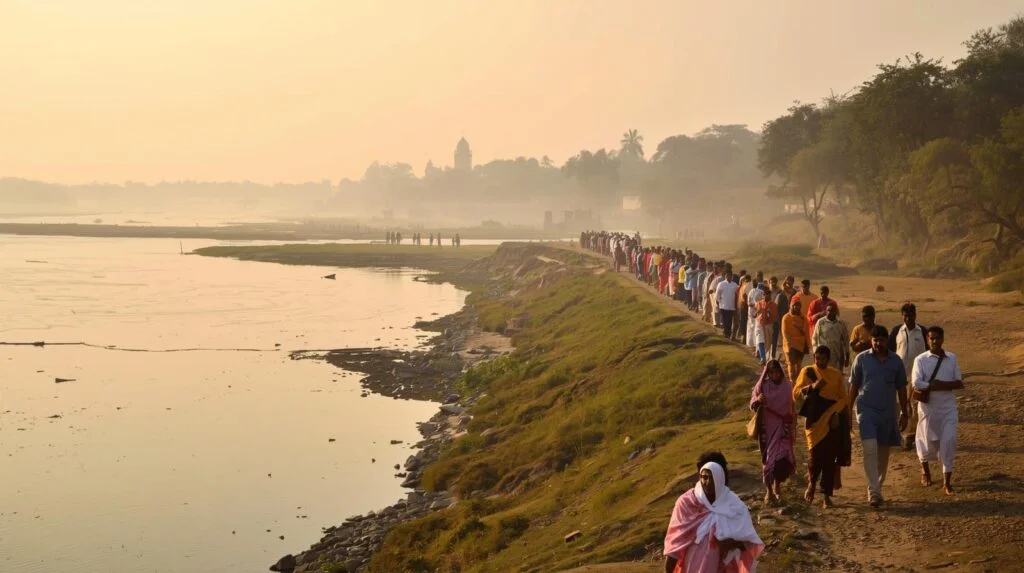
At Rampura Ghat near Tilakwada in Narmada district, Gujarat, the river takes a rare northward turn before bending back south. This northward flow, called Uttarvahini, is considered exceptionally auspicious, and completing a circumambulation of this short stretch is treated as spiritually equivalent to a much longer parikrama by many devotees.
A gap most guides skip: the walk is barefoot for a large stretch of riverbank sand and stone, and the March-April sun in this belt is already intense by 11 am. Pilgrims who start after 8 am regularly regret it. Start before sunrise if you have the option.
Complete Route: South Bank (Dakshin Tat)
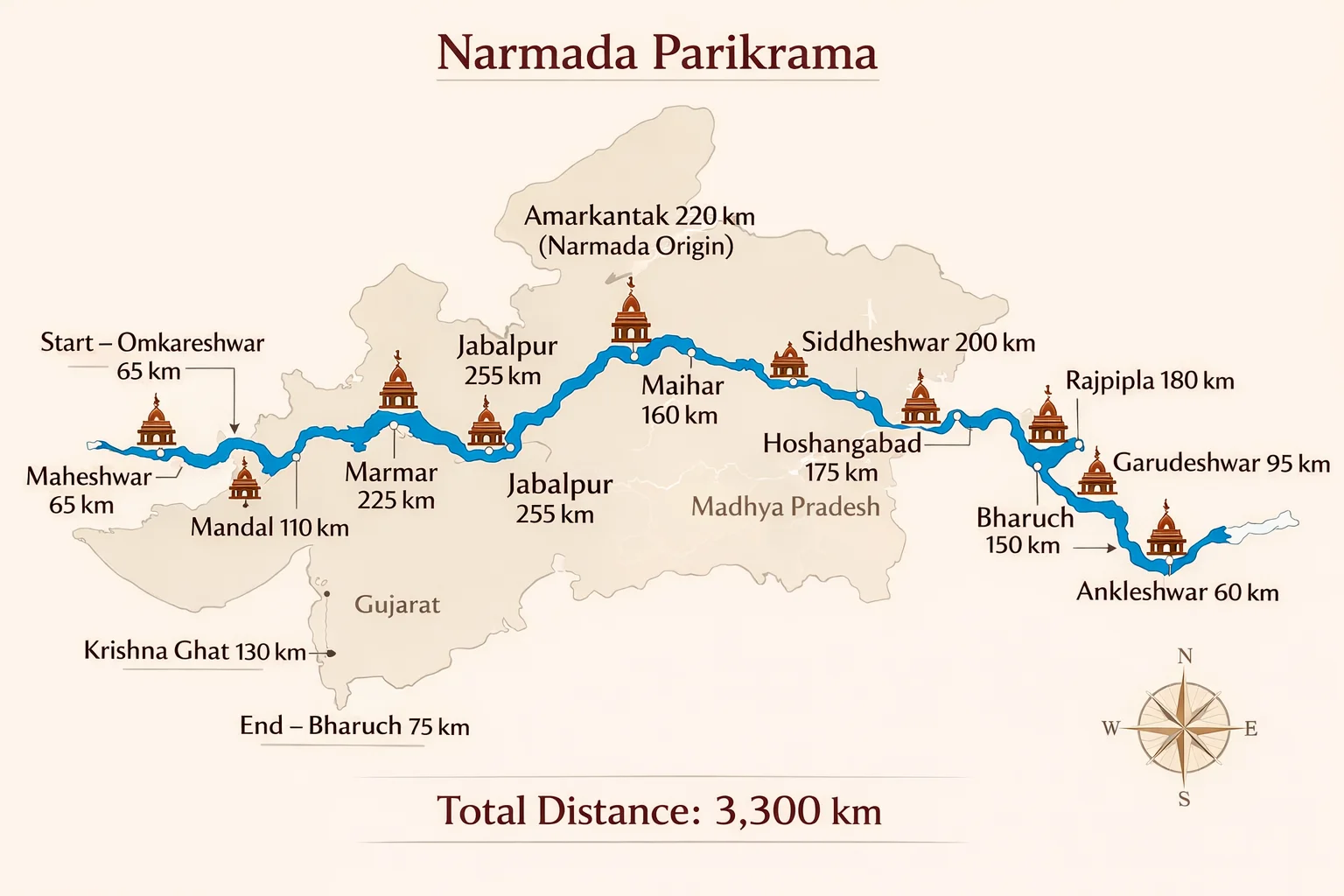
The traditional full parikrama begins at Amarkantak, Madhya Pradesh, the source of the Narmada, and moves downstream along the south bank to where the river meets the Arabian Sea near Bharuch, Gujarat.
| # | Stop | State | Approx. Distance from Previous Stop |
|---|---|---|---|
| 1 | Amarkantak (Source) | Madhya Pradesh | Start |
| 2 | Dindori | Madhya Pradesh | ~85 km |
| 3 | Mandla | Madhya Pradesh | ~55 km |
| 4 | Jabalpur (Bhedaghat) | Madhya Pradesh | ~95 km |
| 5 | Narsinghpur | Madhya Pradesh | ~60 km |
| 6 | Hoshangabad (Narmadapuram) | Madhya Pradesh | ~70 km |
| 7 | Omkareshwar | Madhya Pradesh | ~150 km |
| 8 | Maheshwar | Madhya Pradesh | ~60 km |
| 9 | Barwaha | Madhya Pradesh | ~30 km |
| 10 | Rajghat / Mandu area | Madhya Pradesh | ~50 km |
| 11 | Shulpaneshwar belt | Maharashtra–Gujarat border | ~120 km |
| 12 | Rajpipla | Gujarat | ~40 km |
| 13 | Tilakwada (Uttarvahini point) | Gujarat | ~25 km |
| 14 | Ankleshwar | Gujarat | ~90 km |
| 15 | Bharuch (Sea point) | Gujarat | ~30 km |
Total South Bank distance: approximately 1,300 to 1,400 km. The North Bank return, upstream from Bharuch back to Amarkantak, covers a broadly similar distance, bringing the full circuit to the 2,600 to 3,800 km range quoted earlier. The wider figure accounts for temple detours, riverbank diversions around dams, and seasonal route changes.
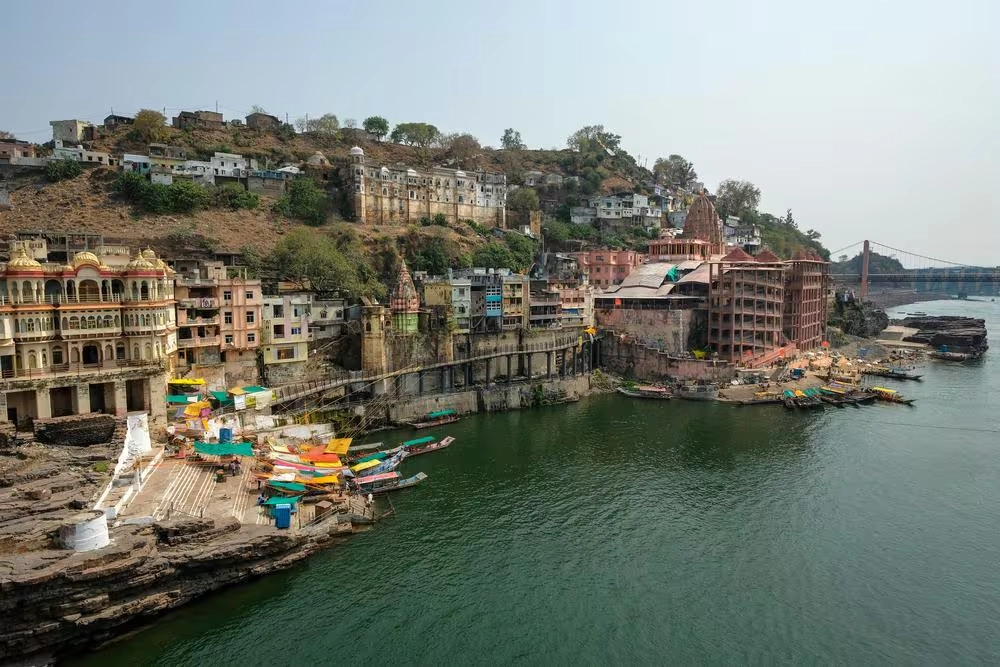
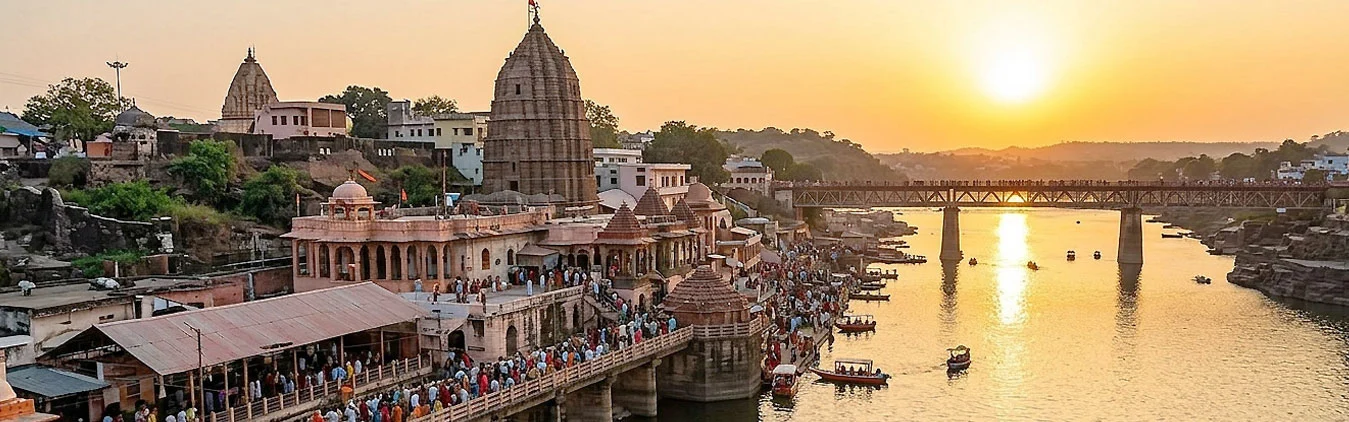
Omkareshwar and Maheshwar remain the two most-visited stops on the entire circuit, and both work well as standalone temple visits if you’re not attempting the full parikrama. Our cover both towns together with the surrounding riverside circuit.
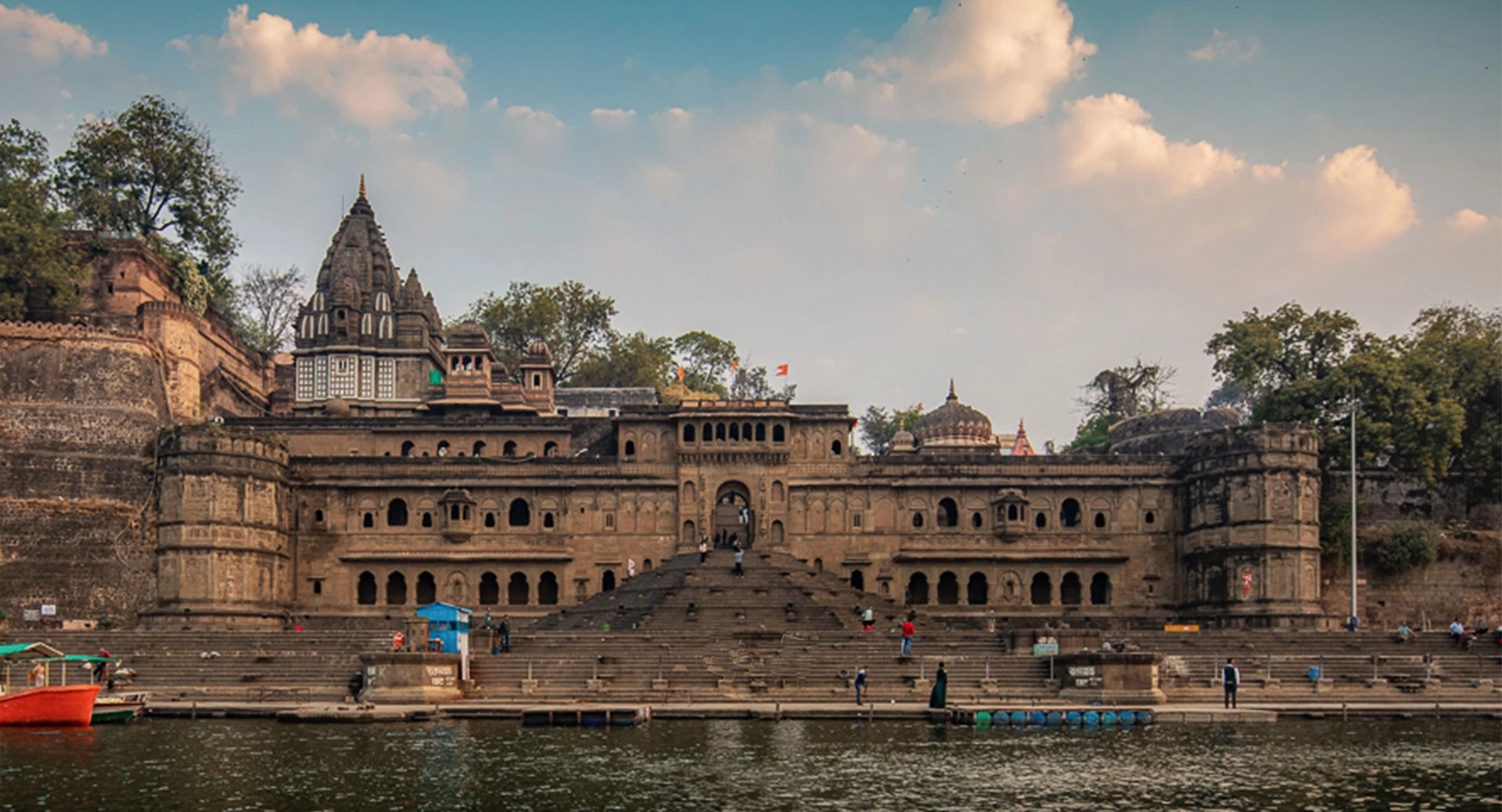
Maheshwar’s riverside ghats and temple complex are also one of the more comfortable overnight stops along the route, with a wider mix of stays than most other points on the south bank.
Best Time to Undertake the Parikrama
This is where most guides give a one-line answer. It genuinely depends on which section you are doing.
- Post-monsoon to winter (October–February): the strongest window for the full padyatra. River levels are manageable, the Madhya Pradesh stretch is cool enough for long walking days, and most dharamshalas are fully staffed for the pilgrim season.
- Chaitra month (March–April): the window for the Uttarvahini Panchkoshi Parikrama specifically, tied to the lunar calendar rather than a fixed date.
- Avoid monsoon (June–September): river levels rise sharply, ghats become slippery, and several riverside paths near Jabalpur and Mandla flood or wash out entirely. This is the single biggest safety mistake first-timers make: assuming a river pilgrimage is fine in the rains because it’s near water anyway.
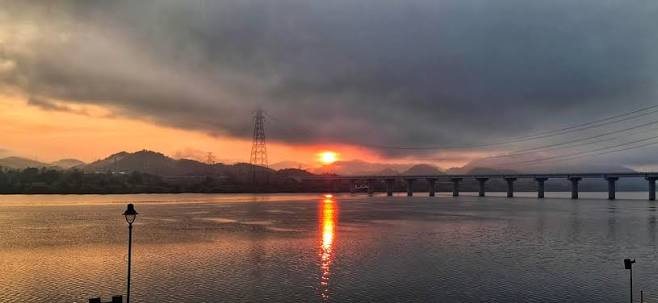
A sunrise start near Rajpipla or the Gujarat stretch of the route is genuinely one of the calmer, cooler ways to experience the parikrama, well before the day’s heat and crowds build up.
Registration: What’s Actually Required in 2026
This is one of the most searched and most inconsistently answered questions, so here is the straight version.
Practical tip most articles miss: if you’re joining as a family or group, register everyone individually rather than as a block booking where possible. Checkpoint staff have been asking for individual QR verification in recent seasons, and a single shared code can cause delays for the whole group.
Rules and Etiquette Along the Route
- The river must always stay to your right-hand side throughout the parikrama; this is the defining rule, and walking with the river on your left breaks the circumambulation
- Crossing the main river at any point is traditionally considered to end the yatra
- Many parikramavasis observe strict vegetarian, often satvik, food through the journey
- Saffron or simple cotton clothing is common but not mandatory for shorter, non-traditional pilgrims
- Silence or minimal speech is observed by serious padyatris during certain stretches, particularly near temples
Packing Guide
Where to Stay
Accommodation ranges from free ashram stays to organised hotel packages, and the right choice depends entirely on which version of the parikrama you’re doing.
- Along the padyatra route: Dharamshalas and ashrams in Omkareshwar, Maheshwar, Jabalpur, and Hoshangabad are the traditional choice; many operate on voluntary donation and are used to hosting parikramavasis, though facilities are basic.
- Near Indore: A popular base for travellers approaching the Omkareshwar to Maheshwar stretch, with a full range from budget lodges to mid-range hotels, useful if you’re doing a vehicle-based parikrama and want a comfortable night before or after the temple circuit.
- Near Nashik: Relevant for pilgrims connecting the Narmada belt with the Godavari pilgrim circuit, and a common stopover for those travelling from Maharashtra.
- For the Gujarat Uttarvahini leg: Rajpipla and nearby towns see a surge in home-stays and temporary pilgrim camps during the Chaitra season; booking ahead is worth it given how quickly beds fill during the peak weeks.
Cost and Budget Breakdown
| Mode | Approx. Duration | Typical Cost (Per Person) | What’s Included |
|---|---|---|---|
| Padyatra (on foot, ashram stays) | 3–6 months | ₹15,000–₹40,000 total | Minimal, mostly donation-based stays and simple meals |
| Self-drive or hired car | 12–18 days | ₹35,000–₹70,000 | Fuel, driver, mid-range hotels, meals |
| Organised bus tour package | 10–15 days | ₹18,000–₹35,000 | Transport, shared accommodation, meals, temple darshan, guide |
| Uttarvahini one-day trip (self-arranged) | 1 day | ₹1,500–₹4,000 | Local transport, food, basic supplies |
These are broad working ranges, not fixed quotes. Actual costs shift with season, group size, and how much comfort you want along the way. For an accurate, personalised figure, it’s always worth speaking to a travel planner who has recently run pilgrims through the same route.
Common Mistakes First-Time Pilgrims Make
- Treating it as a trek instead of a pilgrimage. Pushing for speed leads to injuries; parikramavasis pace themselves deliberately, and rushing defeats the purpose most people undertake it for in the first place.
- Skipping registration for the Uttarvahini leg and assuming it’s informal like the rest of the route. It isn’t anymore, so plan ahead.
- Underestimating the barefoot stretches. Even fit walkers get sole blisters within the first two hours if they haven’t conditioned their feet beforehand.
- Ignoring connectivity gaps. Relying entirely on a phone for maps and payments causes real problems in stretches between Mandla and Jabalpur.
- Attempting the full padyatra without checking monsoon timing. Several riverside sections become unsafe or impassable between June and September.
Final Thoughts
The Narmada Parikrama rewards planning as much as devotion. Knowing which version fits your time and fitness, registering correctly where it’s actually required, and packing for the specific stretch you’re walking will do more for your experience than any spiritual preparation alone.
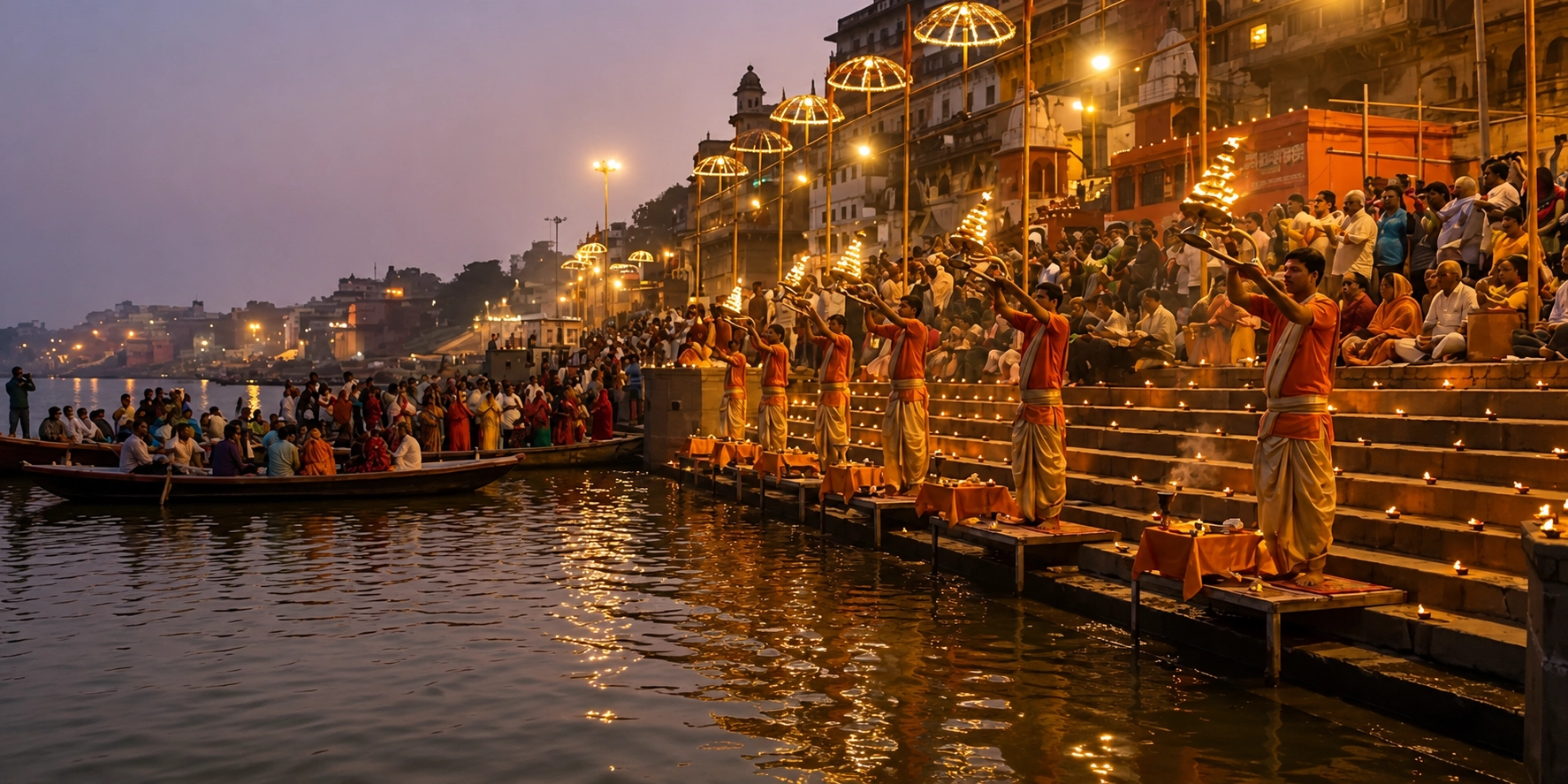
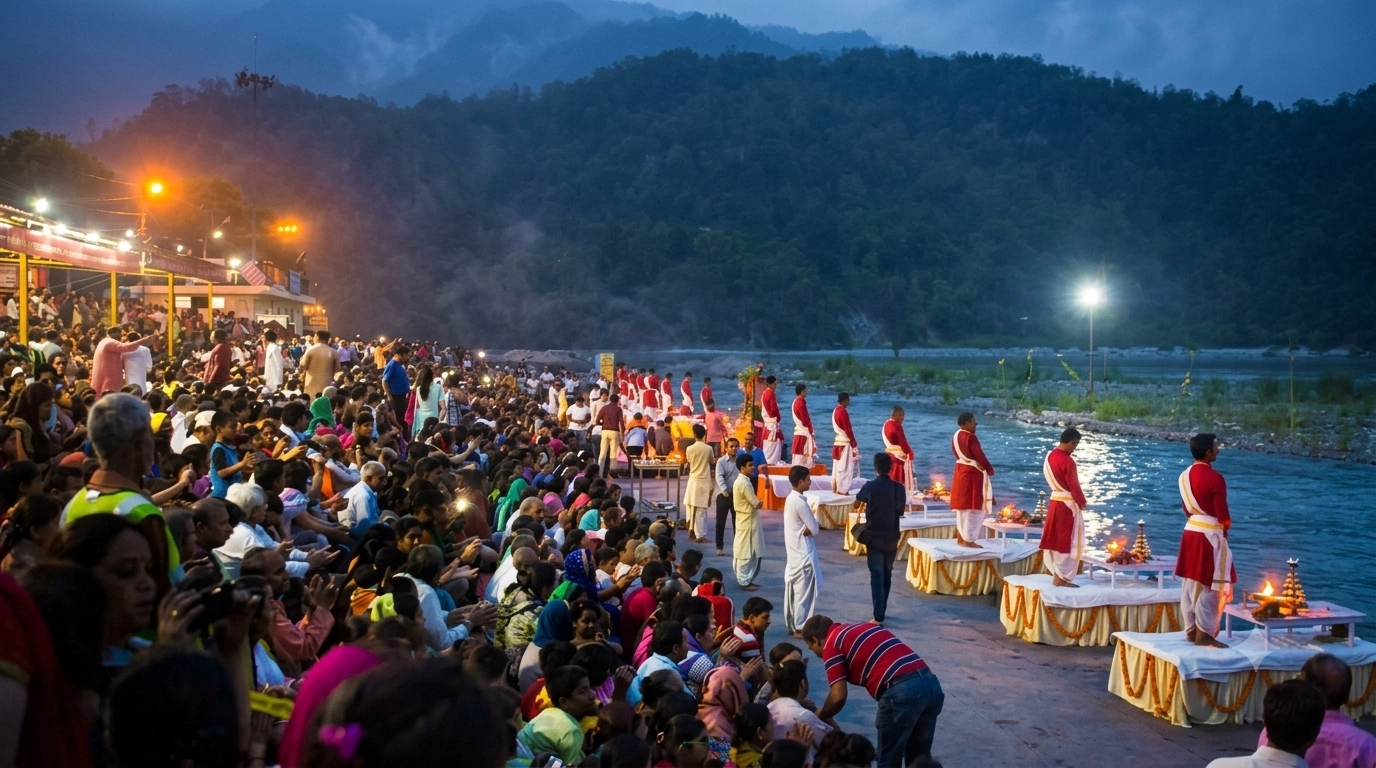
If you’d rather not coordinate route logistics, ashram bookings, and Gujarat registration deadlines on your own, Shree Krishna Travel World puts together guided organised bus tour packages covering transport, verified stays, and local guidance across both the full circuit and the Uttarvahini leg. Explore our pilgrimage tour packages, or if the ghats of Kashi and Rishikesh are also on your list, take a look at our guides to the Ganga Aarti in Varanasi and the Ganga Aarti in Rishikesh. Get in touch with our travel desk today to plan your Narmada Parikrama for the upcoming season.